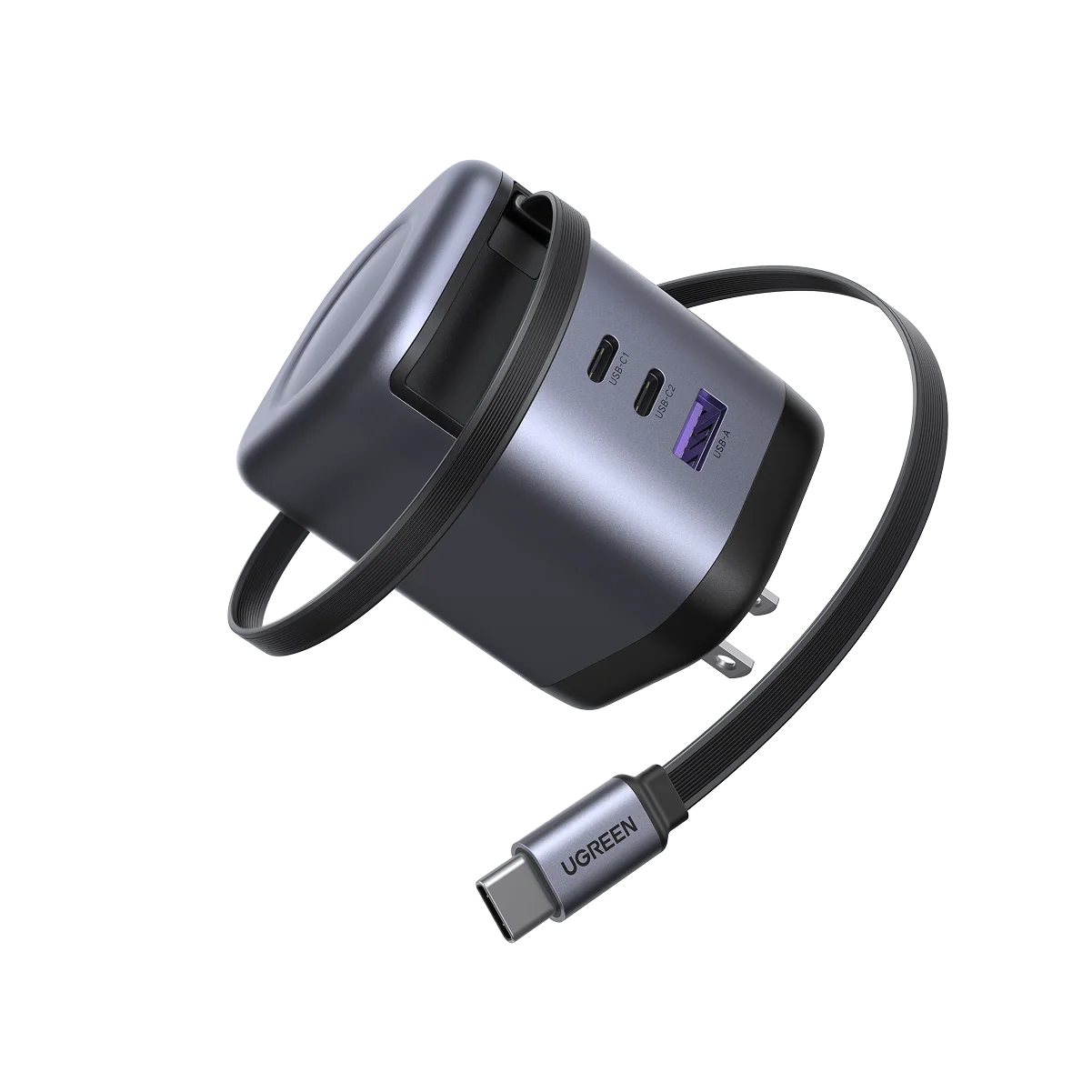
UGREEN’s published Nexode range is worth shortlisting if you want a compact charger with more than one port, or portable power for devices away from a socket. The important caveat is simple: range-level descriptions are a starting point, not a substitute for the specifications of the exact model in your basket.
UGREEN Nexode Chargers and Power Banks at a Glance
AI-generated illustration — not a retailer product photo.
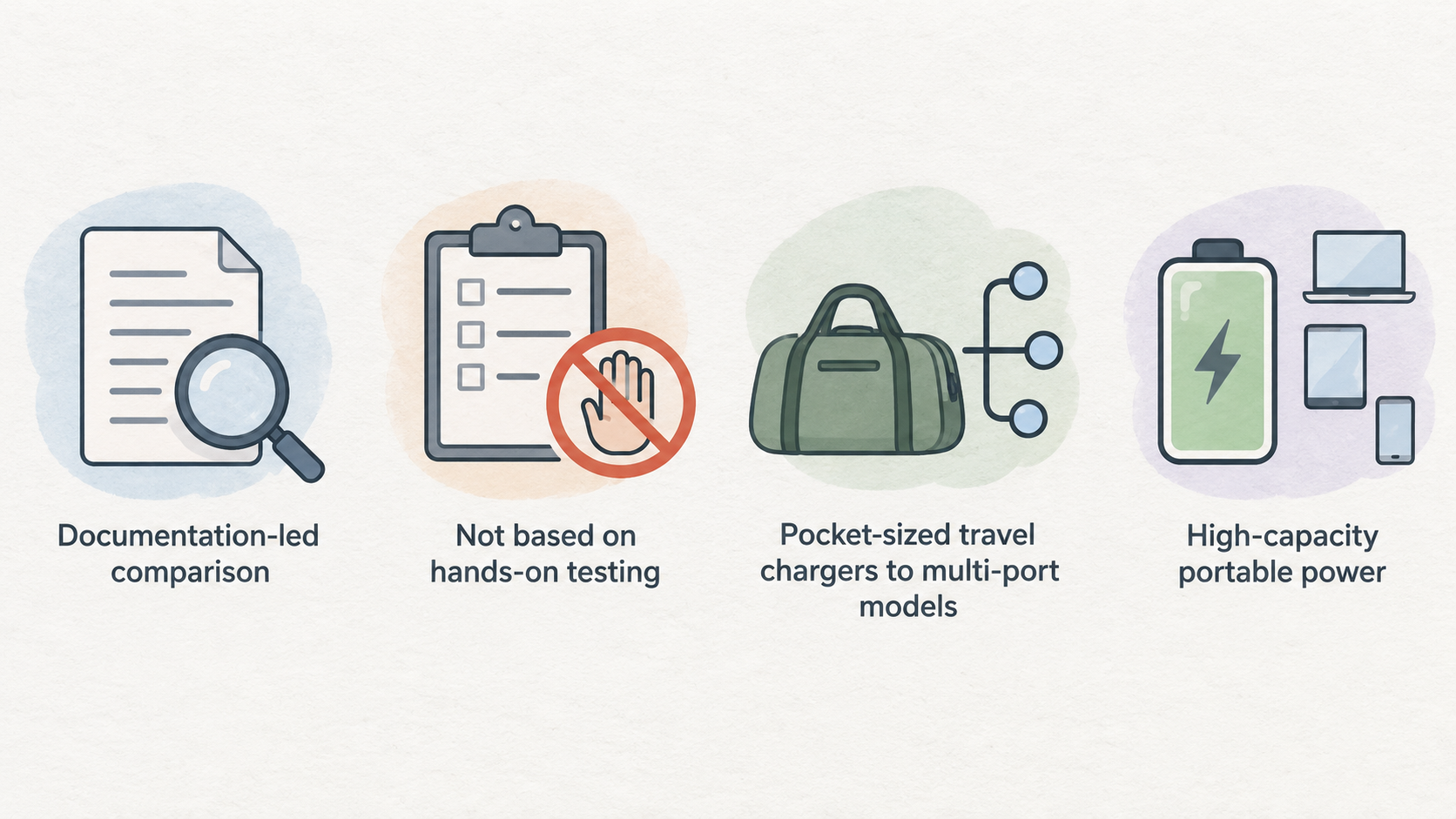
This is a documentation-led comparison of UGREEN’s Nexode charger range and its power-bank category. It is not based on hands-on testing, so it does not make claims about long-term reliability, charging speed in a particular home or office, or heat under sustained use.
UGREEN describes its charger collection as spanning pocket-sized travel chargers through to multi-port models, with GaN technology, intelligent power distribution and multi-layer safety systems. Its Nexode page groups products under Nexode Pro, Nexode and Nexode Retractable Series. Separately, UGREEN presents its power banks as high-capacity portable power for laptops, smartphones and other devices.
For a buying decision, start with the job you need the product to do: wall-powered charging at a fixed location, shared charging for several devices, or battery power while travelling. Then compare the selected model’s stated output, ports, supported charging standard, dimensions, compatibility, cable requirements, capacity and warranty terms. A headline figure alone is rarely enough to establish fit.
What the Nexode Charger Range Covers
AI-generated illustration — not a retailer product photo.
UGREEN positions the Nexode charger family across Nexode Pro, Nexode and Nexode Retractable Series. Its wider charger collection describes a range from small travel-oriented chargers to multi-port units, so the family can be a useful starting point whether you need one USB-C charging point or a more central desk setup.
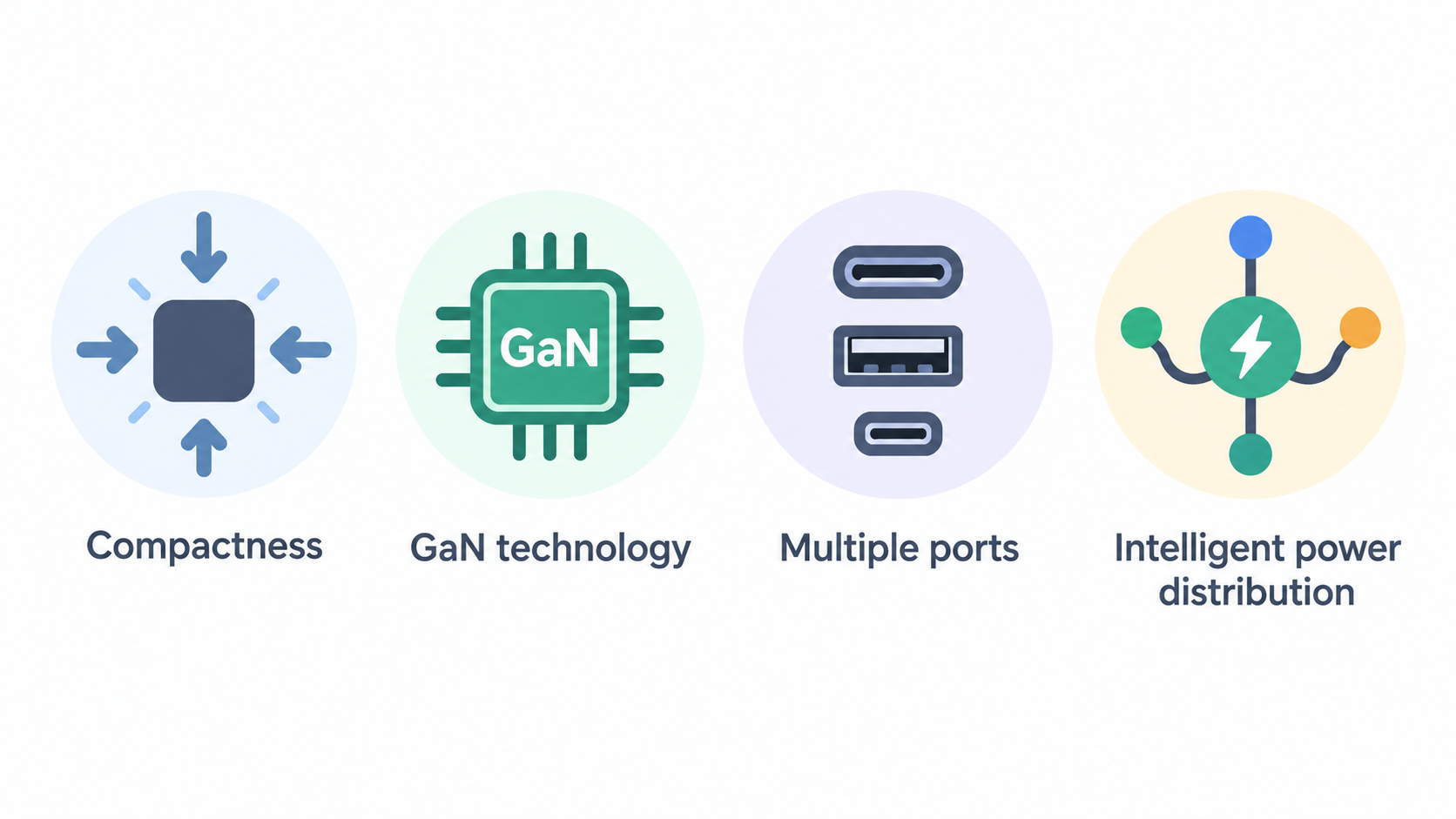
The published range messaging centres on compactness, GaN technology, multiple ports and intelligent power distribution. Two useful range anchors are the UGREEN Nexode 300W 5-Port Charger and UGREEN Nexode 500W 6-Port Charger, both shown on the official Nexode page. They demonstrate that the line includes higher-port options intended for charging several devices in one place.
Those examples should not be treated as specifications for every Nexode product. A smaller travel charger may have a different port mix, total output and power-sharing behaviour. Likewise, a high-output multi-port unit may be a better match for a permanent desk than for a lightweight travel bag. Use the model page to turn the broad range into a practical shortlist.
Documented Strengths of UGREEN Nexode Chargers
The strongest documented appeal is breadth of charging setups. UGREEN says its chargers pair advanced GaN technology with intelligent power distribution and multi-layer safety systems, while the Nexode range highlights compactness and support for more ports. For someone who wants to consolidate compatible charging jobs at one socket, that combination can be compelling.
UGREEN’s Nexode page also describes Thermal Guard™ Smart Protection as monitoring temperature in real time and adjusting output automatically for safety and efficiency. Treat that as a manufacturer-documented feature, rather than an independently verified measure of thermal performance. It is relevant when comparing published feature sets, but it does not establish how a given model will feel or perform in every environment.
The 300W five-port and 500W six-port Nexode examples make the shared-desk use case particularly clear. They may suit buyers who regularly charge several compatible devices at a single location and value fewer separate charging bricks. The right conclusion still depends on the selected model’s port-allocation table and on the input requirements of every device you plan to connect.
Nexode Charger Limitations and Checks
A multi-port charger’s headline wattage is not a promise that every port can deliver that amount at the same time. Before buying, check the exact model’s total output and its published port-allocation table, especially if you expect to charge a laptop alongside a phone, tablet or accessory.
Also check the device, cable and charging protocol together. A charger can only be a good fit when the selected port, cable and device input requirements align with the model’s published capabilities. UGREEN’s range pages establish that the brand offers multiple ports and intelligent distribution, but they do not provide a universal allocation, compatibility list or output figure for every product.
Avoid filling those gaps with assumptions. The supplied official material does not establish independent conclusions about longevity, real-world charging times or operating heat for a particular Nexode charger. If any of those points decide the purchase, verify the current product page and warranty information for the exact model instead of relying on family-level marketing.
UGREEN Power Banks: Portable Power Considerations
AI-generated generic editorial illustration — not a retailer product photo and does not depict the reviewed product or service. Help readers distinguish a fixed charger from a portable power bank based on where and which devices they need to charge.
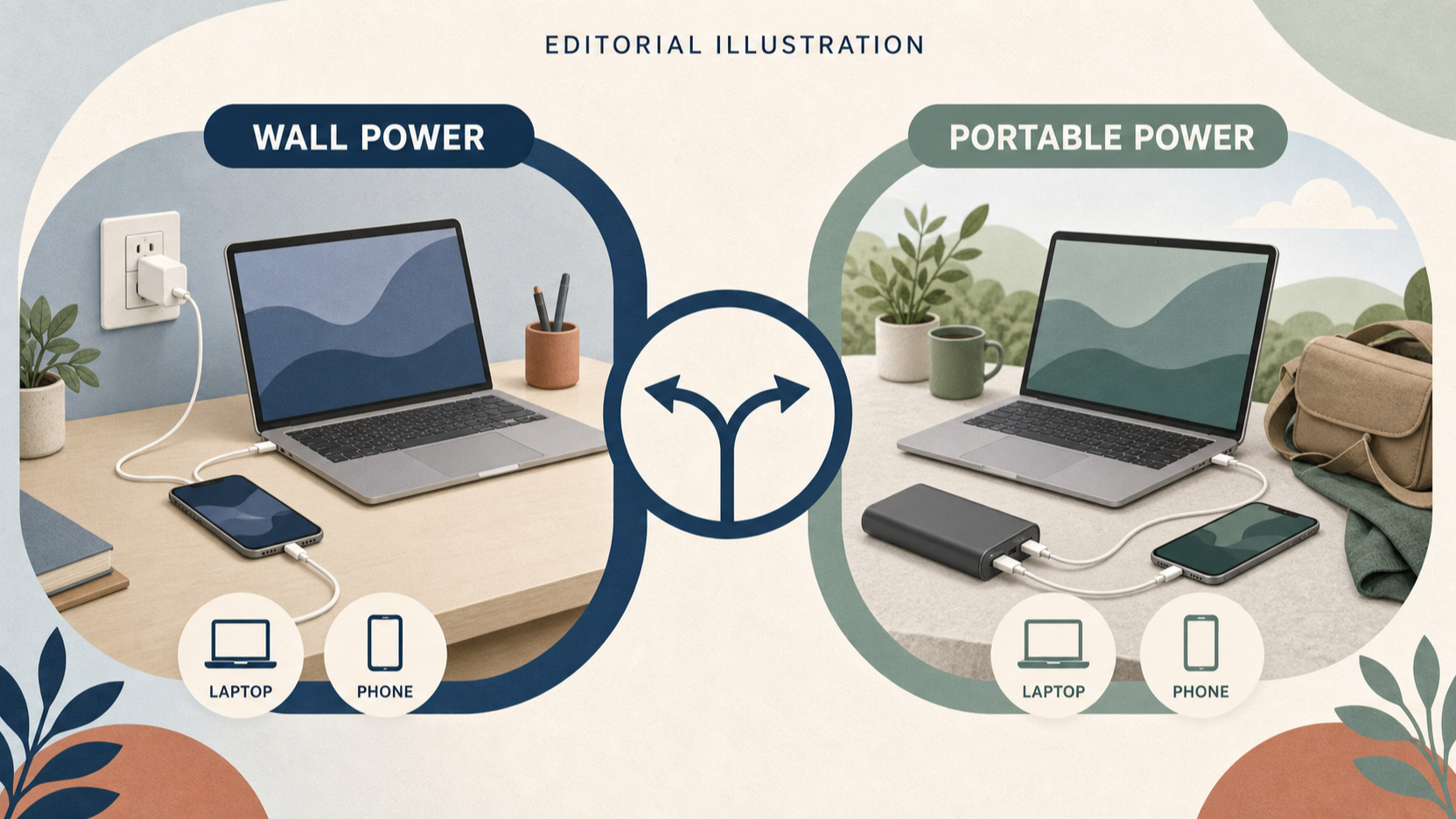 A UGREEN power bank is the better category to consider when access to a wall socket is the problem. UGREEN describes its power banks as high-capacity portable power that can charge laptops, smartphones and more. That makes the category relevant for commuting, travel, events or backup charging away from a fixed outlet.
Do not compare a power bank’s stored capacity directly with a wall charger’s output. They answer different questions: capacity concerns the energy held for portable use, while a charger’s output concerns what it can deliver while connected to mains power. Nor should a stated capacity automatically be read as a guarantee of the usable power available to a particular device in every situation.
For any individual power bank, verify the current product page for capacity, output, ports, size, weight, device compatibility and any travel-use guidance. Travel rules and permitted carriage can vary, so check the relevant carrier and route requirements too. This prevents a portable-power purchase from being based solely on a category description.
Who UGREEN Chargers and Power Banks Suit
Choose a compact Nexode charger if you mainly charge one compatible phone, tablet or laptop from a socket and want to compare smaller options in the range. Confirm the chosen model’s stated output and port type against your device’s charging requirements before ordering.
Choose a higher-port Nexode option if several compatible devices share one desk, bedside outlet or family charging point. UGREEN’s published 300W five-port and 500W six-port examples show the range includes this type of setup. Compare the precise port-sharing behaviour, not just the maximum number on the front of the product.
Choose a power bank if portability is the priority. UGREEN places laptops and smartphones within its portable-power category, but the suitable model will depend on its individual capacity, output and dimensions. Check whether it is practical to carry, whether its output matches your device, and what cable is included or required.
Skip—or pause—your purchase if you have not confirmed your device’s input requirements, if you need a feature that is not documented for the selected product, or if you need guaranteed simultaneous output across several ports. Buyers should also check protocol support, dimensions, cable information and warranty terms on the specific product page. That modest extra checking is the difference between a sensible range shortlist and an assumption-led purchase.
[Compare the exact UGREEN model specifications before buying.]
Frequently Asked Questions
Are UGREEN Nexode chargers suitable for charging a laptop?
They may be, provided the chosen Nexode model’s published output, port configuration and supported charging arrangement match your laptop’s requirements. UGREEN identifies laptops within its portable-power category and presents Nexode as a charger range with multi-port examples, but the supplied range information does not confirm suitability for every laptop and every charger model.
Start with the laptop maker’s charging requirements, then compare them against the product page for the exact charger you are considering. A higher range headline is not, by itself, a guarantee that every connected port can supply the same level of power. This is especially important if you intend to charge a laptop while also charging a phone, tablet or accessory from the same unit. Confirm the cable and connector arrangement as well, rather than assuming that any USB-C cable will produce the same result.
Can I charge several devices from one UGREEN Nexode charger?
Some Nexode products are presented as multi-port options: UGREEN specifically shows a 300W five-port charger and a 500W six-port charger. Check the chosen model’s port-allocation information before relying on simultaneous charging, because total output and allocation between connected devices are model-specific.
For a desk or shared travel setup, think about the devices that will actually be connected at the same time, not simply the number of available sockets. A multi-port charger can be convenient when one outlet must cover several everyday devices, but the practical arrangement depends on how the selected model distributes power after additional devices are plugged in. Review the manufacturer’s current product documentation before purchase if a particular laptop port or simultaneous-use scenario is essential.
Should I choose a UGREEN charger or a UGREEN power bank?
Choose a charger when you will normally have access to mains power and want to charge from a socket. Consider a power bank when you need stored, portable power for a laptop, smartphone or another compatible device away from a socket. Then compare the exact model’s output, capacity, size and compatibility details.
The two categories can also complement one another. A wall charger is usually the simpler everyday choice for home, office or hotel use, while a power bank can add flexibility during travel, commuting or long periods away from an outlet. The trade-off is practical: portable stored power brings capacity and physical-size considerations, whereas a charger depends on access to mains power. Choose according to the situations you expect most often.
What specifications should I check before buying a UGREEN charging product?
Check the exact model’s output, number and type of ports, port sharing, charging protocol support, compatibility, dimensions, cable information and warranty terms. For power banks, also check capacity and current travel-use guidance. These product-level details are more decisive than a range headline alone.
It is useful to make this comparison before selecting by price or by the broad Nexode name alone. Match the port mix to the devices you own, consider whether you need a compact travel-oriented option or a multi-port desk charger, and check the listed dimensions if bag space matters. Where simultaneous charging is important, use the selected model’s published allocation information rather than assuming every port behaves identically. Keep the product documentation available for warranty and compatibility checks.
Sources
Related reading
- Best USB-C chargers and power banks: evidence-led picks for phones, tablets and laptops
- Anker vs UGREEN chargers and power banks: ports, power and portability compared
- Anker chargers and power banks review: strengths, limits and alternatives
- How to choose a USB-C charger or power bank for your devices
Editorial information: About our editorial team · Read our editorial policy · Read our affiliate disclosure.